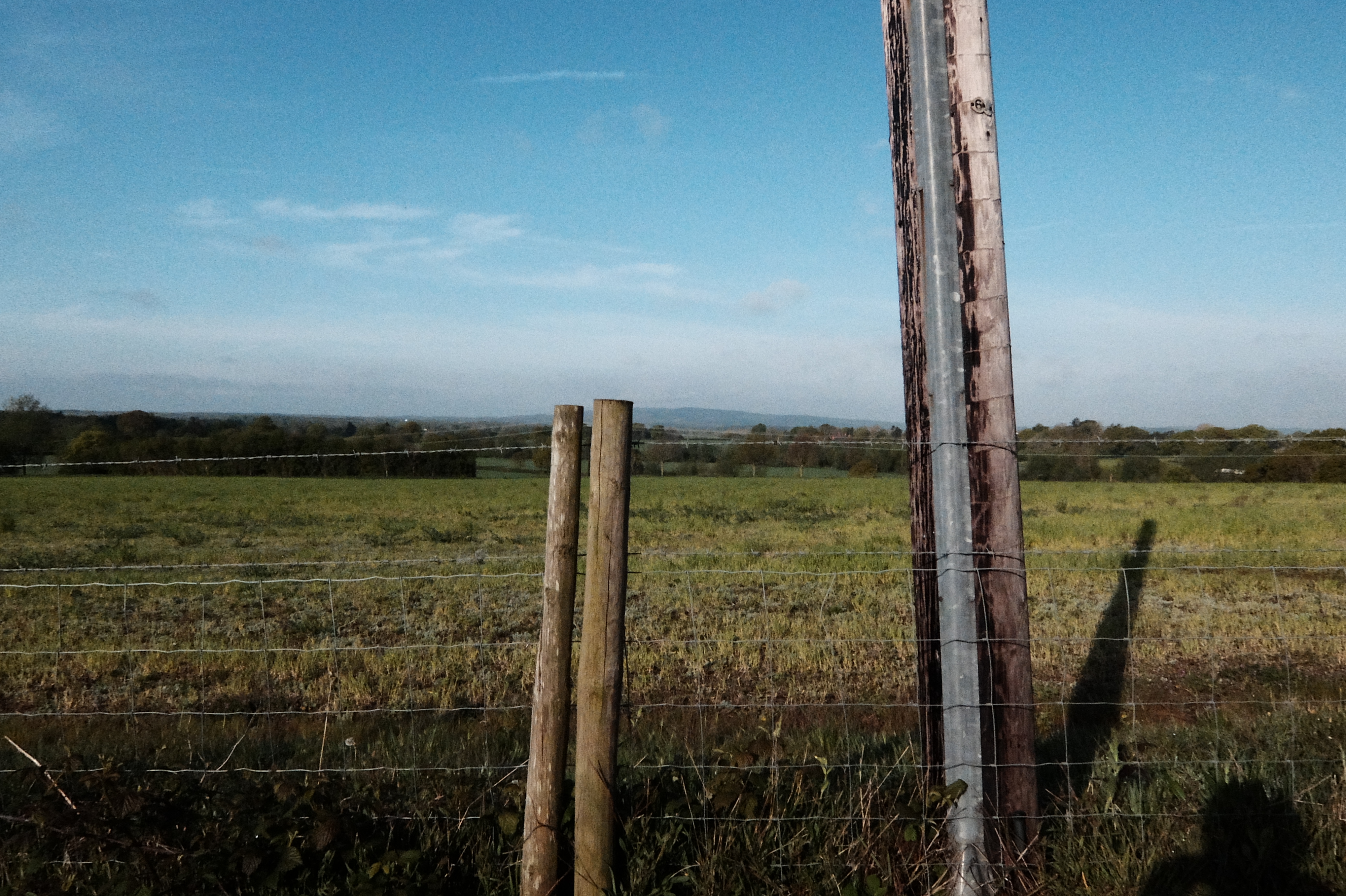
I am enjoying the simplicity of taking photos with my digital camera again. Using a real camera with physical controls means I can focus on the art of taking pictures without getting distracted by WhatsApp notifications. Fujifilm offer what I consider the best film simulation modes in a digital camera thanks to their heritage as a photographic film manufacturer. I will be shooting with the underrated Fujifilm XQ2 released in 2015. I intend to shoot jpegs over raw as I don’t plan on editing these photos at all. There is something about the process of making sure you get the shot in the moment, without improving the results later, that, to me feels like a more genuine approach.
That's a long title! It is the name of the University of Cambridge Advance Online course I'm currently studying. The Hollywood strikes have caused a prolonged period of downtime for those of us working in the VFX industry, so I'm using this time to explore new avenues of interest. I have always been interested in UX design ever since studying HCI at university and Interactive System Design is a passion of mine. Perhaps I should have gone in to engineering! Making AI systems interpretable for humans is a real challenge for the future as AI becomes ever more integrated in the software, tools and everyday systems we use. So far the course has given me a fascinating insight in to function modelling, usability, risk management, and legal issues around AI, all from a practical systems thinking perspective.
It might seem strange having come from a 3D background, to want to focus to 2D games in Unity. But I really want to focus on game design and rapid development within Unity. My career has always been focused on visual refinement and photo-realistic 3D so this is a new direction for me. In my past experience I have found constraints only lead to more creativity. All I can say, from what I've seen so far, is that I'm excited about the possibilities, so whenever I have the time I'll post Unity 2D updates here.
I made a little environment to test my Aseprite animations in Unity. Ignore the temporary snow particle system! In the video I am using the arrow keys to control the cat. I used Unity's built in Animator control system. You can see that if our cat is left alone for a while the sleep animation is triggered.

I started using Aseprite to create some simple sprites for a little Unity 2D project. Embracing the charm of 8-bit graphics, I've chosen a modest tile size of 16x16 for my pixel art cat. I firmly believe that constraints can breed creativity. The small canvas size prevents me from overworking details and encourages thoughtful pixel placement. However, working within the confines of a 16x16 space demands precision – a single misplaced pixel can transform an eye into an ear! I find this restriction not only challenging but also surprisingly satisfying. The small tile size and limited colour palette means I can't overwork my art, it forces me to make choices and move on to the next thing, which is actually very liberating.
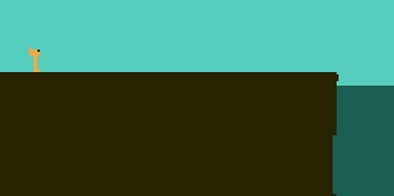
Made by Jake Elliott for the Experimental Gameplay '10 Seconds' competition, I Can Hold My Breath Forever is a beautifully concise experience. At first glance, with it's minimal graphics and straightforward objectives, it's hard to see why this little experimental game got so much attention. The comments section on the games' website implies that this game packs an emotional punch.
For me the enchanting thing about this game is the power of it's stripped down minimal design. The game elegantly engages the player with a simple single gameplay mechanic. You control a small creature diving deep in to an underwater cave complex in search of a lost friend. Each time your creature dives in to the water the screen slowly fades darker until you find the next cavern of air. The darkening screen is such an apt visual signifier for running out of air that it makes for a fairly intense experience.
Playing all the way through to the touching and unexpected ending is well worth it if you're lucky enough to find this gem still online somewhere.
The game creator's website is here.
Here's a nice little TED talk by advertising guru Rory Sutherland. He believes that major improvements to large scale systems can be achieved through relatively minor design changes. On large scale projects the more subtle elements of the user interface get sidelined in favour of larger, bolder design statements. Sutherland uses some amusing examples to illustrate the value of good user experience design. In this concise and inspiring talk he shows us that spending time on a few key details incurs a very low opportunity cost but can yield some unforgeable results.
Watch the TED talk here.